
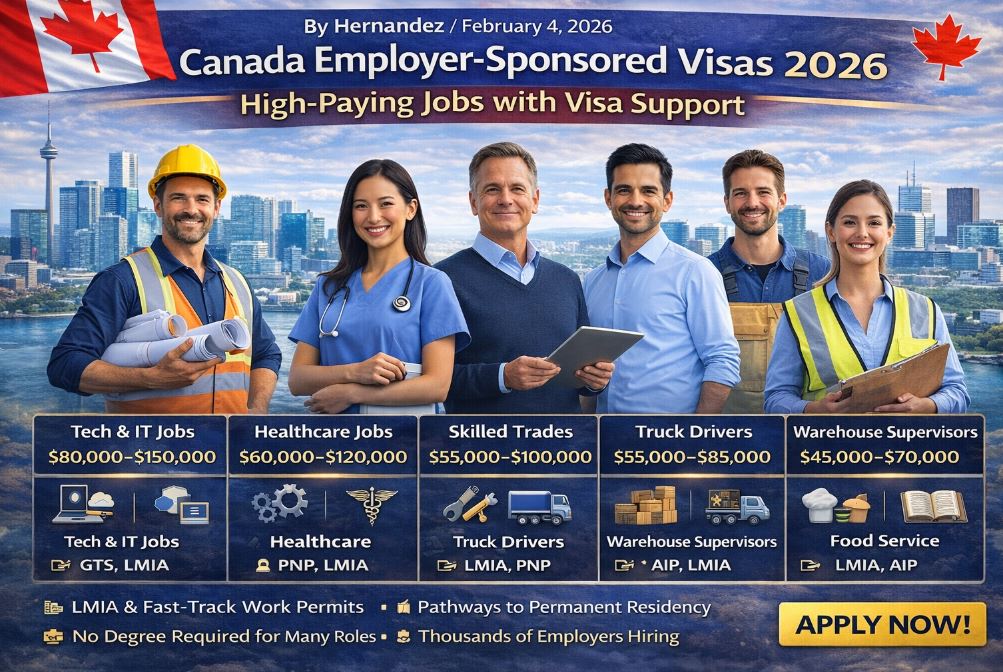
Canada’s employer-sponsored visa programs in 2026 continue to create substantial opportunities for skilled and semi-skilled foreign workers across high-growth sectors. With structured work permit options, employer-backed sponsorship, and clear transitions to permanent residency, these programs remain among the most reliable pathways for international professionals seeking stable, well-paid employment in Canada.
Why Canada Is Sponsoring More Foreign Workers in 2026
Canada faces ongoing labour shortages driven by demographic shifts, economic expansion, and accelerated growth in priority industries such as technology, healthcare, construction, manufacturing, and transportation. To close these gaps, the federal government has expanded access to:
Advertisements
- Employer-sponsored work permits
- LMIA-approved job offers
- Skilled worker immigration pathways
- Temporary Foreign Worker Programs
- Work visas linked to Permanent Residency (PR)
These measures allow employers to recruit internationally while offering workers legal status, competitive wages, and long-term settlement options.
WE’RE HERE TO HELP YOU
Check Your Eligibility
Get a simplified CRS-like estimate based on age, education, English level, experience, and key bonuses. Informational only — not a legal decision.
Eligibility Form
Fill the fields below to get your estimated score.
Types of Employer-Sponsored Visas in Canada (2026)
Canadian employers rely on several established visa routes to hire foreign talent.
1. LMIA Work Permit (Labour Market Impact Assessment)
The LMIA-based work permit remains the most common sponsorship pathway.
Best suited for:
- Truck drivers
- Welders
- Carpenters
- Factory and manufacturing workers
- Restaurant and food service staff
- Retail supervisors
- Caregivers
Benefits:
Advertisements
- Confirmed job offer from a Canadian employer
- Employer-supported work permit
- Recognized pathway toward Permanent Residency
2. Global Talent Stream (GTS) — Fast Approval
The Global Talent Stream is designed for highly skilled professionals in specialized fields.
Processing time: Approximately 2–3 weeks
High-demand occupations:
- Software developers
- Data analysts
- UX/UI designers
- Cybersecurity specialists
- AI and machine learning engineers
- Cloud solutions architects
This stream is particularly popular among technology employers seeking rapid onboarding.
3. Provincial Nominee Program (PNP) Employer-Sponsored Streams
Each province operates employer-led nomination programs aligned with local labour needs.
Popular provinces for sponsorship:
- Alberta
- Saskatchewan
- Manitoba
- Nova Scotia
- Ontario
- British Columbia
Several PNP streams accept applicants without prior Canadian work experience, provided a valid employer offer is secured.
4. Atlantic Immigration Program (AIP)
The AIP supports hiring in Canada’s Atlantic provinces: Newfoundland and Labrador, Nova Scotia, New Brunswick, and Prince Edward Island.
Strong demand sectors include:
- Healthcare
- Food services
- Hospitality
- Logistics and transportation
- Skilled trades
5. Caregiver Program (Home Support Worker Pilot)
This program targets caregivers, nannies, and home support workers.
Advantages include:
- Eligibility to bring family members
- Accelerated transition to Permanent Residency
High-Paying Jobs in Canada With Visa Sponsorship (2026)
Tech and IT Roles (GTS + LMIA)
Salary range: CAD $80,000–$150,000+
In-demand roles:
- Software engineers
- Cloud developers
- AI and machine learning specialists
- DevOps engineers
- Cybersecurity analysts
Major employers: Shopify, RBC, Scotiabank, Telus, IBM, Deloitte Canada.
Healthcare Positions
Salary range: CAD $60,000–$120,000
Roles include:
- Registered Nurses
- Personal Support Workers
- Medical laboratory technicians
- Physiotherapists
Large public and private healthcare providers regularly sponsor foreign workers.
Skilled Trades and Construction
Salary range: CAD $55,000–$100,000
High-demand trades:
- Welders
- Carpenters
- Plumbers
- Electricians
- Heavy equipment operators
Most hiring occurs through LMIA and PNP pathways.
Truck Drivers (Long-Haul and Local)
Salary range: CAD $55,000–$85,000
Provinces such as Saskatchewan, Alberta, Manitoba, and New Brunswick continue to report critical shortages.
Warehouse and Logistics Supervisors
Salary range: CAD $45,000–$70,000
Many roles qualify for fast-track processing through LMIA and AIP programs.
Food Service and Hospitality
Salary range: CAD $30,000–$50,000
Common sponsored roles:
- Cooks
- Restaurant managers
- Bakers
- Cashiers
- Servers
Salary Overview for Sponsored Workers in Canada (2026)
| Job Category | Salary Range (CAD) | Visa Route |
|---|---|---|
| IT and Tech | $80,000–$150,000 | GTS, LMIA |
| Healthcare | $60,000–$120,000 | PNP, LMIA |
| Skilled Trades | $55,000–$100,000 | LMIA, PNP |
| Truck Drivers | $55,000–$85,000 | LMIA |
| Warehouse Supervisors | $45,000–$70,000 | AIP, LMIA |
| Food Service | $30,000–$50,000 | LMIA, AIP |
How to Apply for Canada Employer-Sponsored Jobs (Step-by-Step)
- Prepare a Canadian-style resume
Use an ATS-friendly format highlighting certifications, licenses, and measurable results. - Apply to verified visa-sponsoring employers
Search using terms such as “visa sponsorship available,” “LMIA-approved employer,” or “foreign workers accepted.” - Secure a formal job offer
A valid offer is mandatory for employer-sponsored visas. - Employer submits LMIA or GTS application
The employer manages most compliance and documentation requirements. - Apply for a work permit
Applications are submitted through IRCC once sponsorship approval is issued. - Arrive in Canada and begin employment
Many visa categories allow progression toward Permanent Residency.
Useful External Links (Official Resources)
- Canada Immigration (IRCC): https://www.canada.ca
- LMIA Work Permit Information: https://www.canada.ca/en/employment-social-development
- Global Talent Stream: https://www.canada.ca/en/employment-social-development/services/foreign-workers/global-talent
- Provincial Nominee Programs: https://www.canada.ca/en/immigration-refugees-citizenship/services/immigrate-canada/provincial-nominees
- Atlantic Immigration Program: https://www.canada.ca/en/immigration-refugees-citizenship/services/immigrate-canada/atlantic-immigration
Frequently Asked Questions
Does Canada still sponsor foreign workers in 2026?
Yes. Ongoing labour shortages ensure continued recruitment of skilled and semi-skilled workers.
Which jobs most often include sponsorship?
Technology, healthcare, skilled trades, trucking, logistics, and hospitality roles commonly offer sponsorship.
How long does LMIA processing take?
Processing typically ranges from 2 to 12 weeks, depending on the employer and occupation.
Can sponsored workers become Permanent Residents?
Yes. LMIA, GTS, PNP, and AIP programs all provide pathways to PR.
Is a degree always required?
No. Many LMIA-supported roles prioritize experience and trade certification over formal education.
Conclusion
Employer-sponsored visas remain one of the most practical and efficient ways to work and settle in Canada in 2026. With strong demand across technology, healthcare, trades, logistics, and hospitality, foreign workers can access competitive salaries, legal work authorization, and long-term residency opportunities. For candidates prepared to target verified employers and follow the correct process, Canada continues to offer a clear and reliable route to professional growth and permanent settlement.